REVIEW
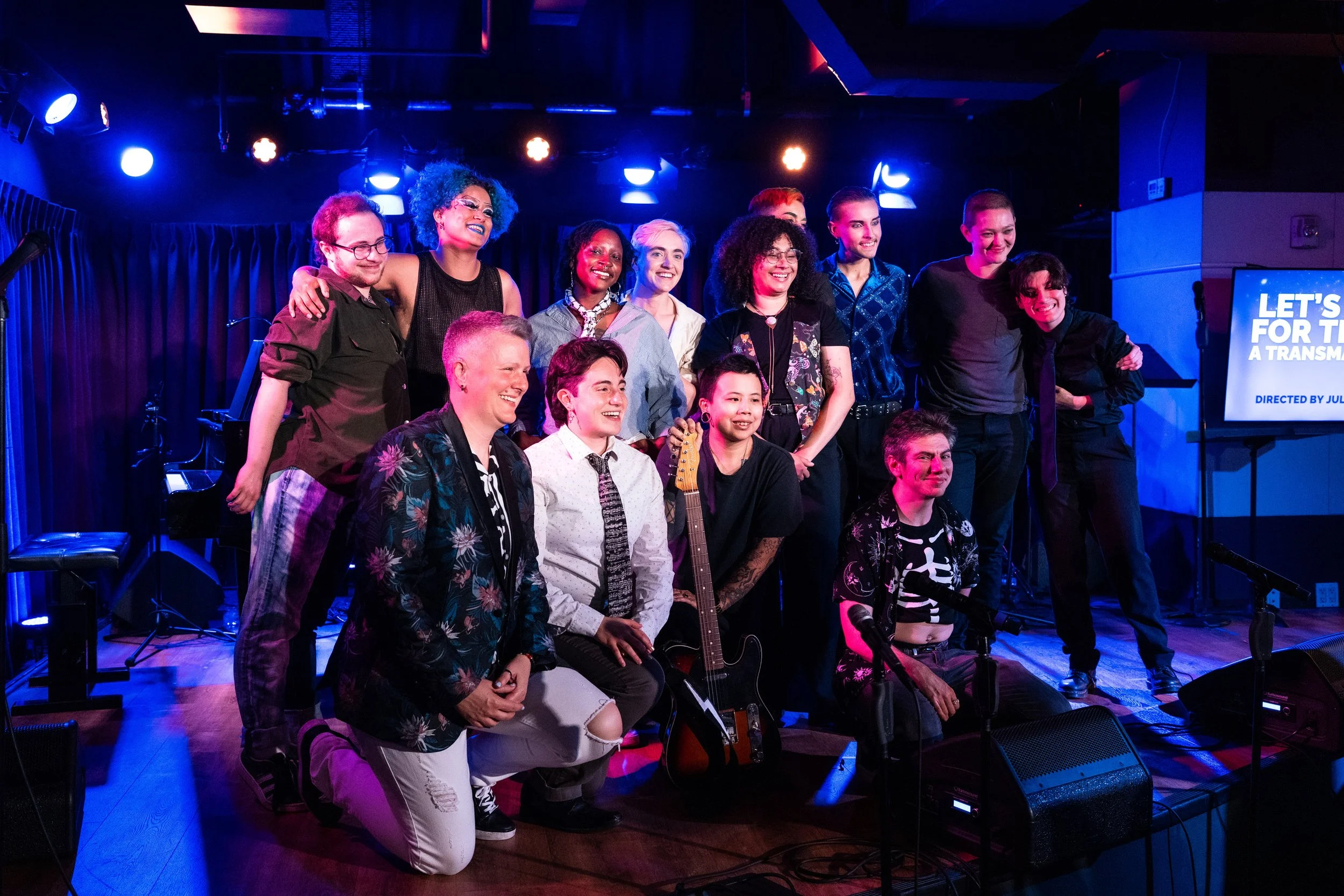
The creative team and cast of Let’s Hear It For The Boys: A Transmasc Cabaret. Photo by Eli Butler.
When I attended Let’s Hear It For The Boys, a variety show of all-transmasculine artists co-produced by Max Raymond and Charlie Hano at Green Room 42 on June 20, I was excited to witness trans art and meet cool trans people.
However, the sold-out show was not just a dazzling night of transmasculine talent. It was also a space to subvert old stories, write new ones, and find one another. Now in its third year, Let’s Hear It For the Boys made me think about the importance of representation, the expansiveness of masculinity, and the fact that we are already creating art that the world deserves to see.
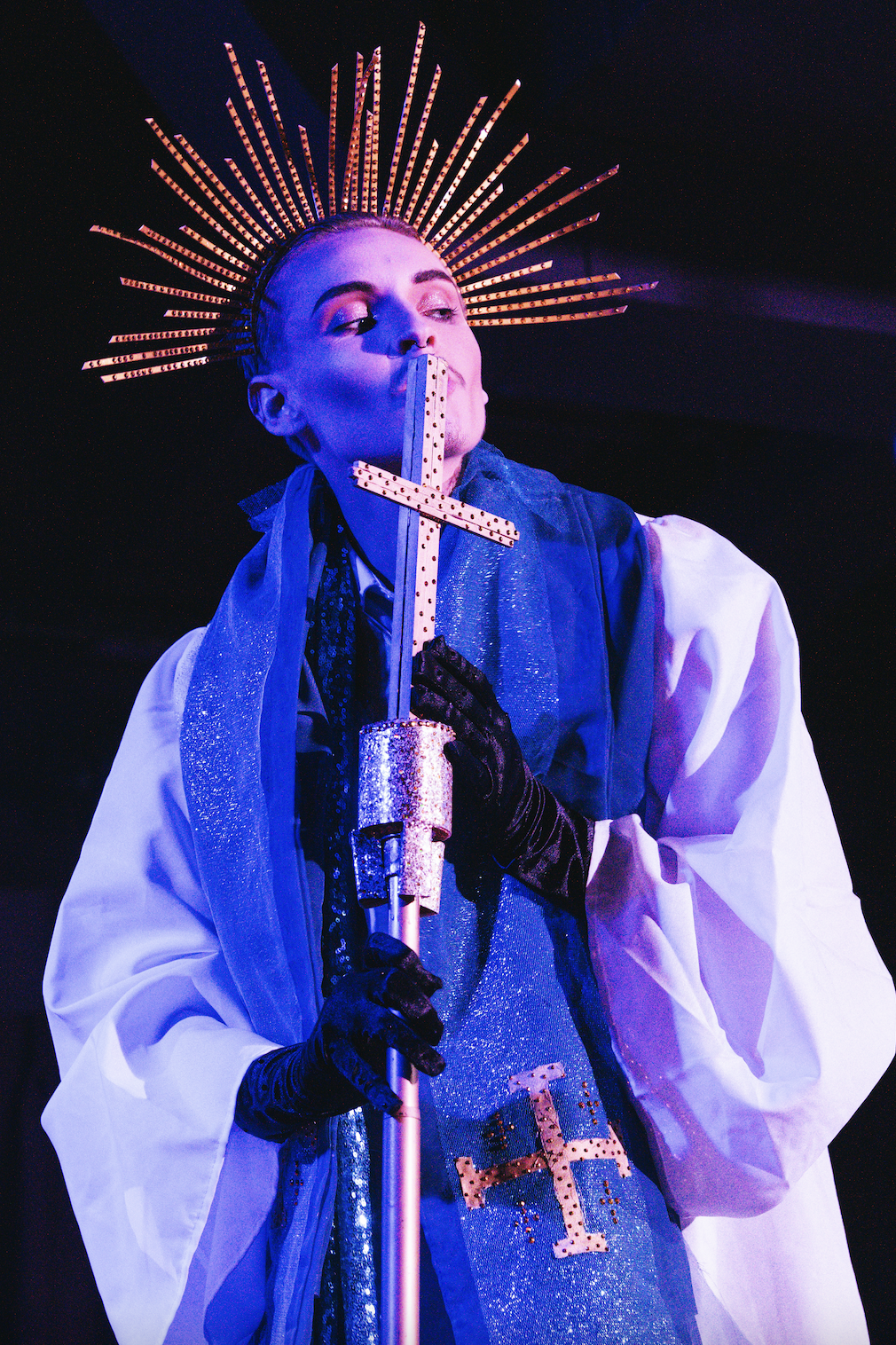
Eli Hagan. Photo by Eli Butler.
The show started with an electric mashup of “Gee, Officer Krupke” from West Side Story and “Cell Block Tango” from Chicago (a new arrangement by Sasha Paris-Carter), a comedic subversion of both songs that featured one of the best musical transitions I’ve witnessed in a long time.
The show then moved into acts that flowed deftly between humor, glamour, absurdity, and hope. By the end of the night, I felt like I had moved through an entire spectrum of emotions. Like this show, which was made of stories, was also itself a story.
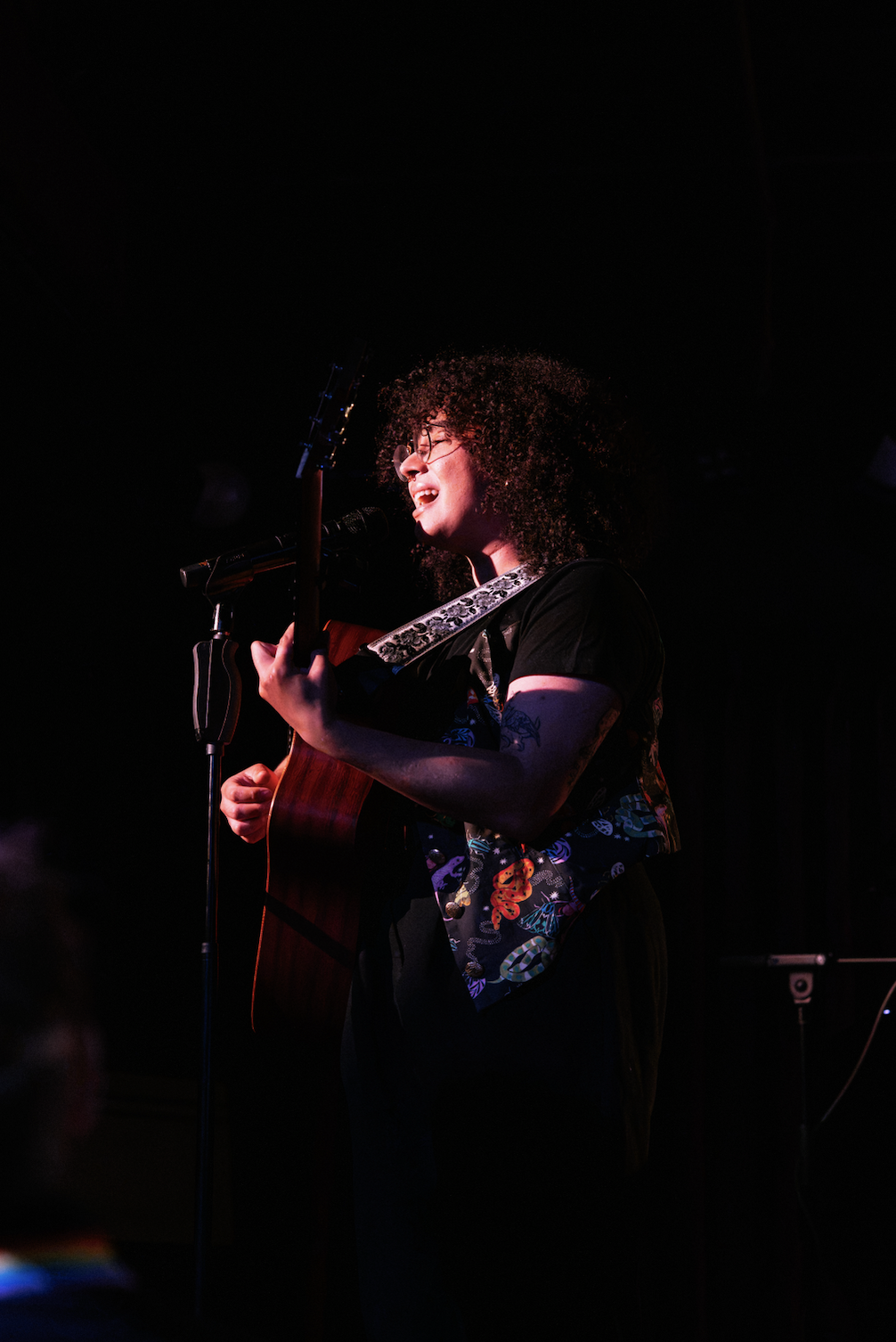
Imani Russell. Photo by Eli Butler.
Patrick Falk’s performances of “Extraordinary” from the musical Pippin, and later, “Cavities” by Landon Frederick (arranged by Jude Caminos), were invigorating. I enjoyed getting to see both Falk’s interpretation of a musical theatre classic and an original song, and how his performance catapulted us into the show with soaring energy.
Zia’s performance of “For Our Sins” from an original musical, The Laugh of the Medusa, written by Thani Brant, was especially striking. Zia conveyed the pathos and melancholy of the lyrics and music in a way that was both sweet and somber, even existential.
Eli Hagan’s performance of “Viva/Unholy,” their most booked act, was a gorgeously envisioned exploration of spirituality and transgression. Their costuming, choreography, and audience interaction all came together in an elegant and sexy performance that was deeply fun to watch.
Samy Figaredo’s performance of “Out Tonight” from RENT, which he performed in Spanish (utilizing an original translation), was also particularly moving. Figaredo infused the song with a particular kind of playful queerness, moving amongst audience members and utilizing the entire room as the stage. I also loved seeing a performance in a language other than English.
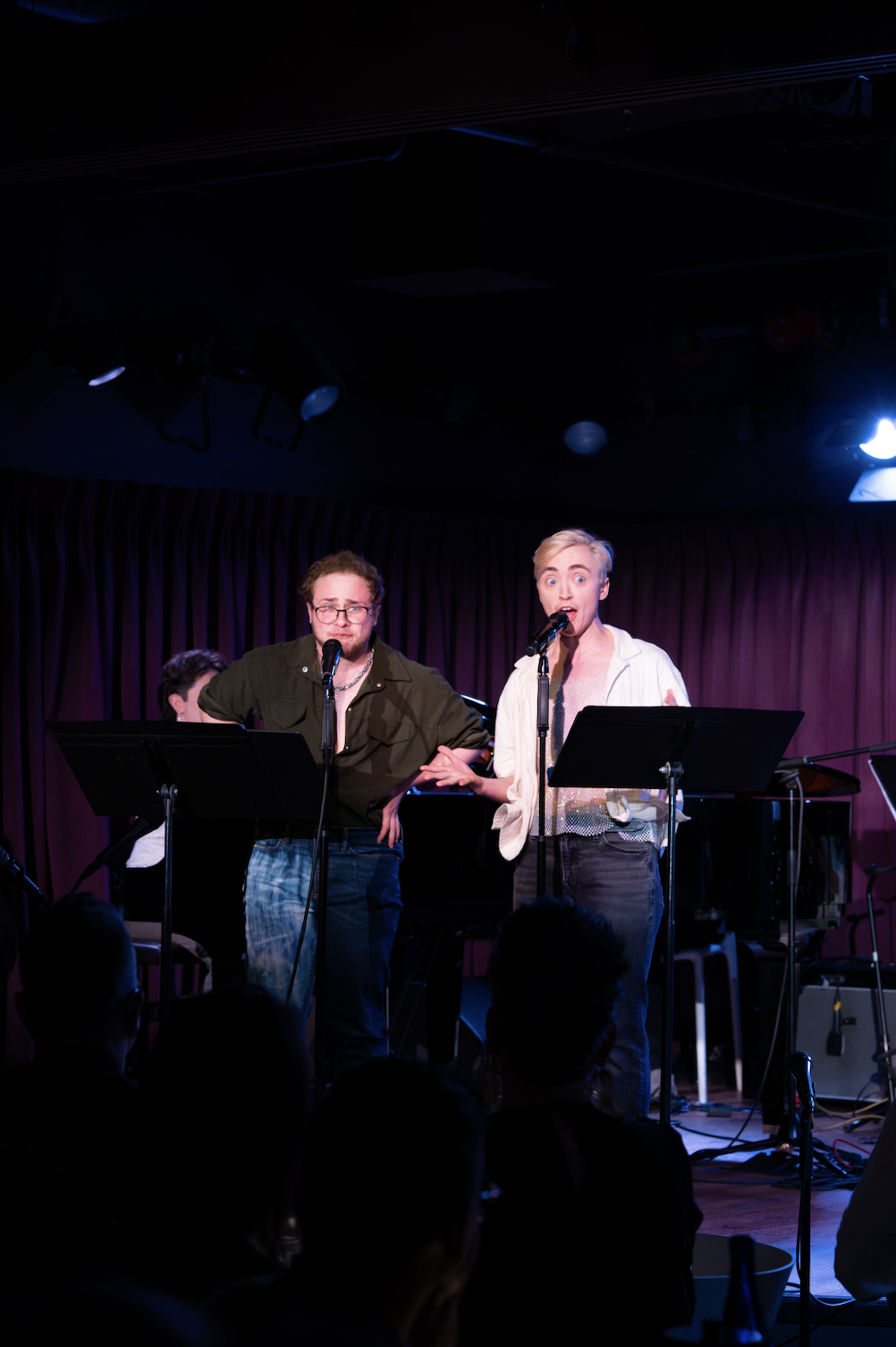
Patrick Falk and Max Raymond. Photo by Eli Butler.
Imani Russell’s performance of “The Manuscript,” from an original musical Confessions of the Fox (written by Abbie Goldberg and Raiah Rofsky) and “Epic III” from Hadestown, were two very different and beautiful performances. The soulfulness of Russell’s interpretation of “Epic III” stayed with me long after the show ended; it was truly like (to use a cliché) you could hear a pin drop.
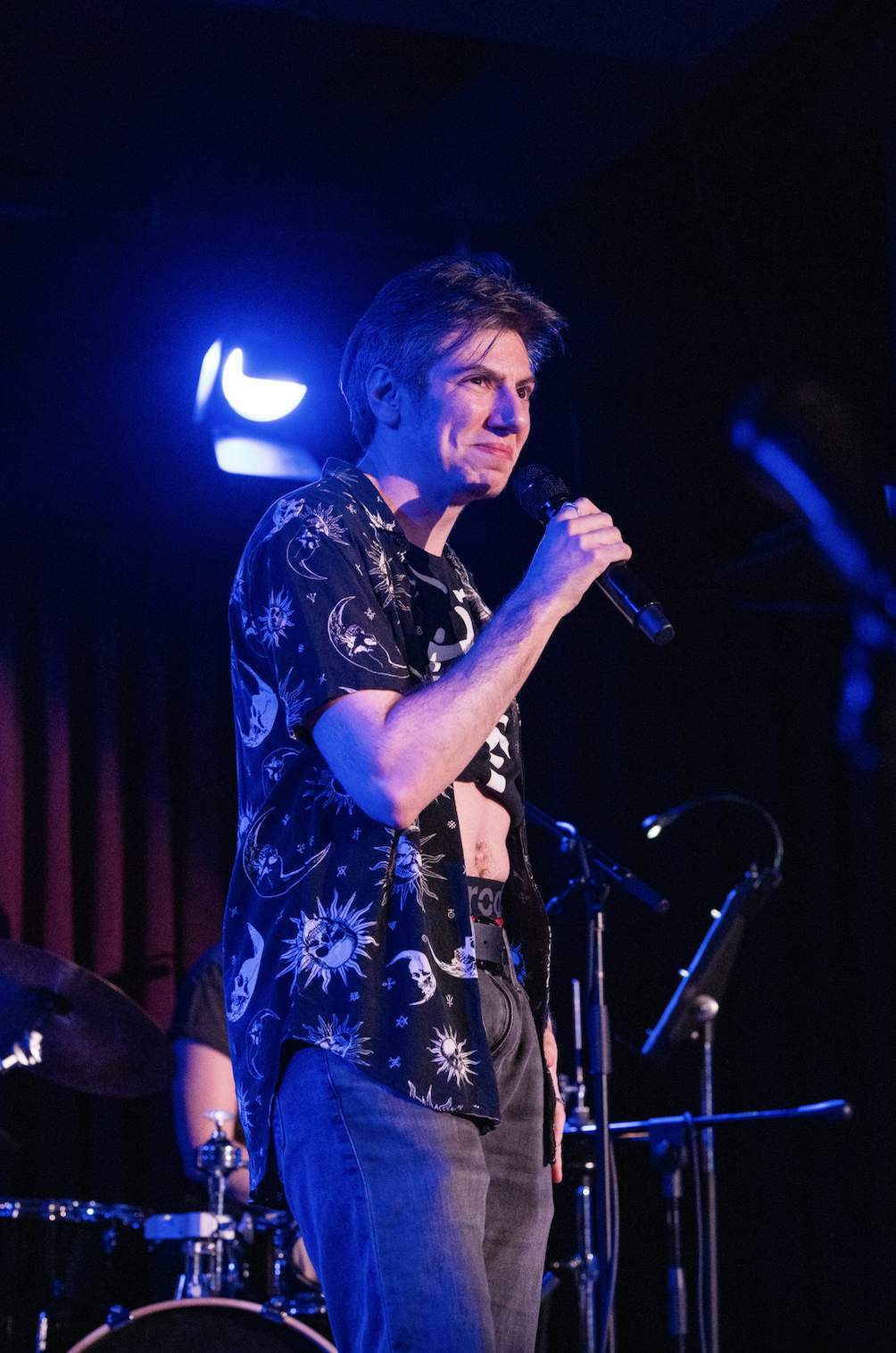
Charlie Hano. Photo by Eli Butler.
Patrick Falk and Max Raymond’s performance of “Mammarelli’s Mastectomies,” written by Ireland Meacham, was one of the more overtly comedic performances of the night. The sketch was both hyper-specific in its references to transmasculine experiences, and universally comedic. The chemistry between Falk and Raymond was incredible, and I found it refreshing to see the topic of transition presented in a way that was as silly as it was poignant.
Masc.Ari’s performance of an original act, based in part on Doja Cat’s song “MOOO!”, was insane, extremely online, and very fun. They also lent this absurdist playfulness to an excerpt from Please Be A Fish (written by Eddie Oliver), in which they acted opposite Zia. The excerpt felt both light and subtly existential. Zia’s performance of “I’ll Cover You (Reprise)” from RENT was the perfect penultimate number. The song’s gesture towards communal care and love felt like a fitting last performance before the last song of the night, which was performed by the entire Ensemble.
Max Raymond’s performance of “Somewhere That’s Green” from Little Shop of Horrors made me reflect on the meaning of Let’s Hear It For the Boys as a whole. Max’s version felt brighter, lighter, and more hopeful than the original version. In his interpretation, I saw a vision of a more gentle, tender world, rather than despair at the idea that such a world was possible.
Towards the end of the night, Charlie Hano, one of the co-producers of Let’s Hear It For the Boys (and the first openly trans man to cast on Broadway), gave a speech about the state of transmasculine representation on Broadway and beyond. Hano’s words were both sobering and inspiring—I would recommend watching the full speech.
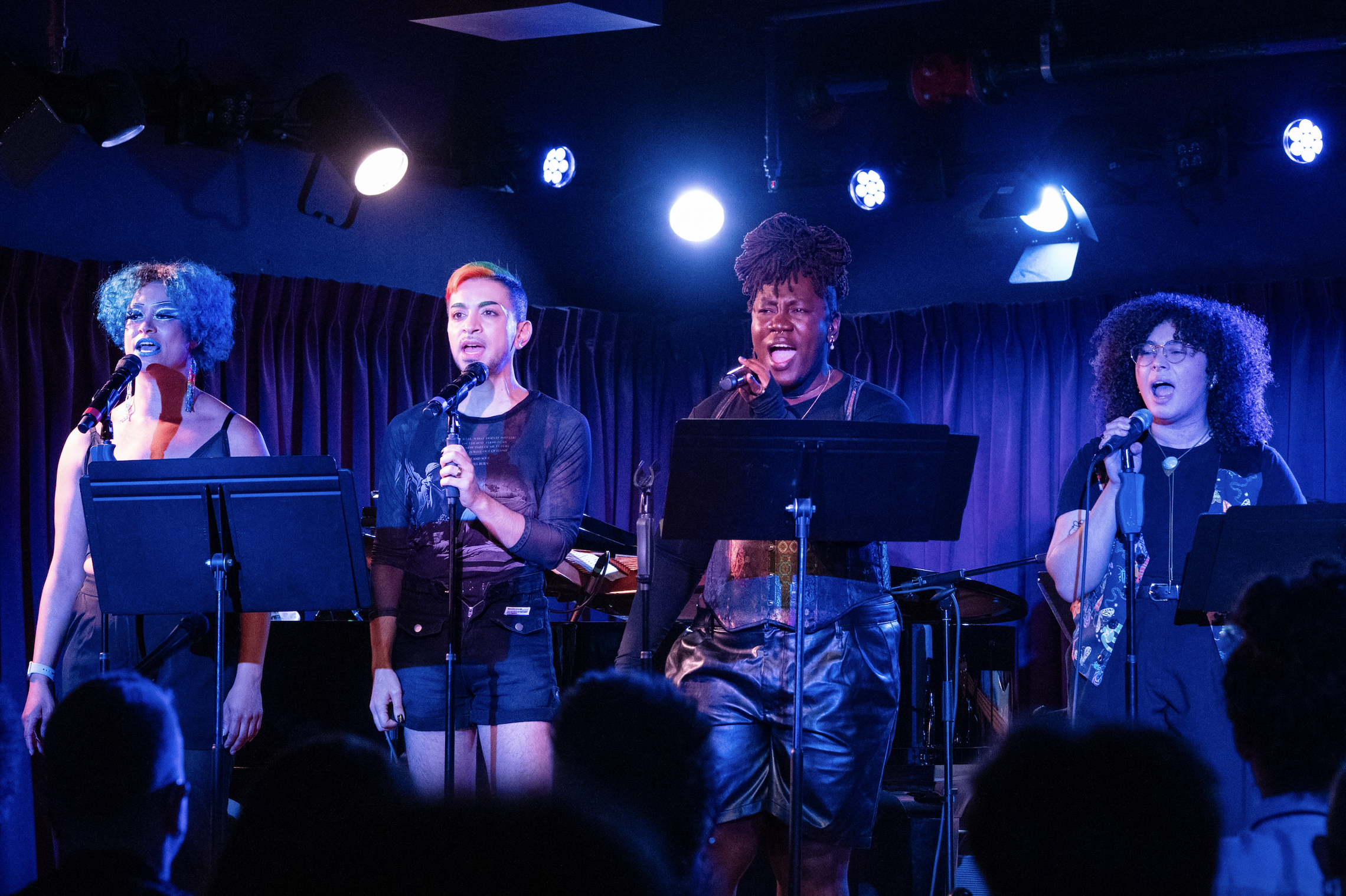
Masc.Ari, Samy Figaredo, Zia, and Imani Russell. Photo by Eli Butler.
It was particularly emotional to hear this speech in a room of predominantly trans and queer people. Hearing the same statistics in an audience of non-trans and queer people might have felt isolating or othering, as if our struggles for representation were being reduced to numbers. However, surrounded by other trans artists, I felt oddly energized. Looking around, I saw so many transmasculine artists who were challenging those statistics.
I also loved the diversity and expansiveness of masculinity represented in the show. As a Korean American trans guy, I often think about how societal pressure to conform to a particular type of masculinity, especially Eurocentric, cisnormative hyper-masculinity, can limit the expansiveness of trans men and transmasculine people’s expression and artistry.
However, Let’s Hear It For the Boys felt like a place where those struggles were implicitly acknowledged, and artists were encouraged to perform and speak to whatever trans/masculinity means to them. For example, the show’s casting call FAQ states that performers and other artists do not have to be on testosterone to audition; they must simply resonate with transmasculinity. I was surprised and gratified to see this explicitly stated. To me, this spoke to a desire to reject a narrow view of who is “masculine” enough.
While not all performances were necessarily centered on masculinity or gender identity, the acts, when taken together as a whole, represented a dazzling spectrum of masculinity that was refreshing and invigorating, and gave me hope for how we might imagine gender identity in the performing arts.
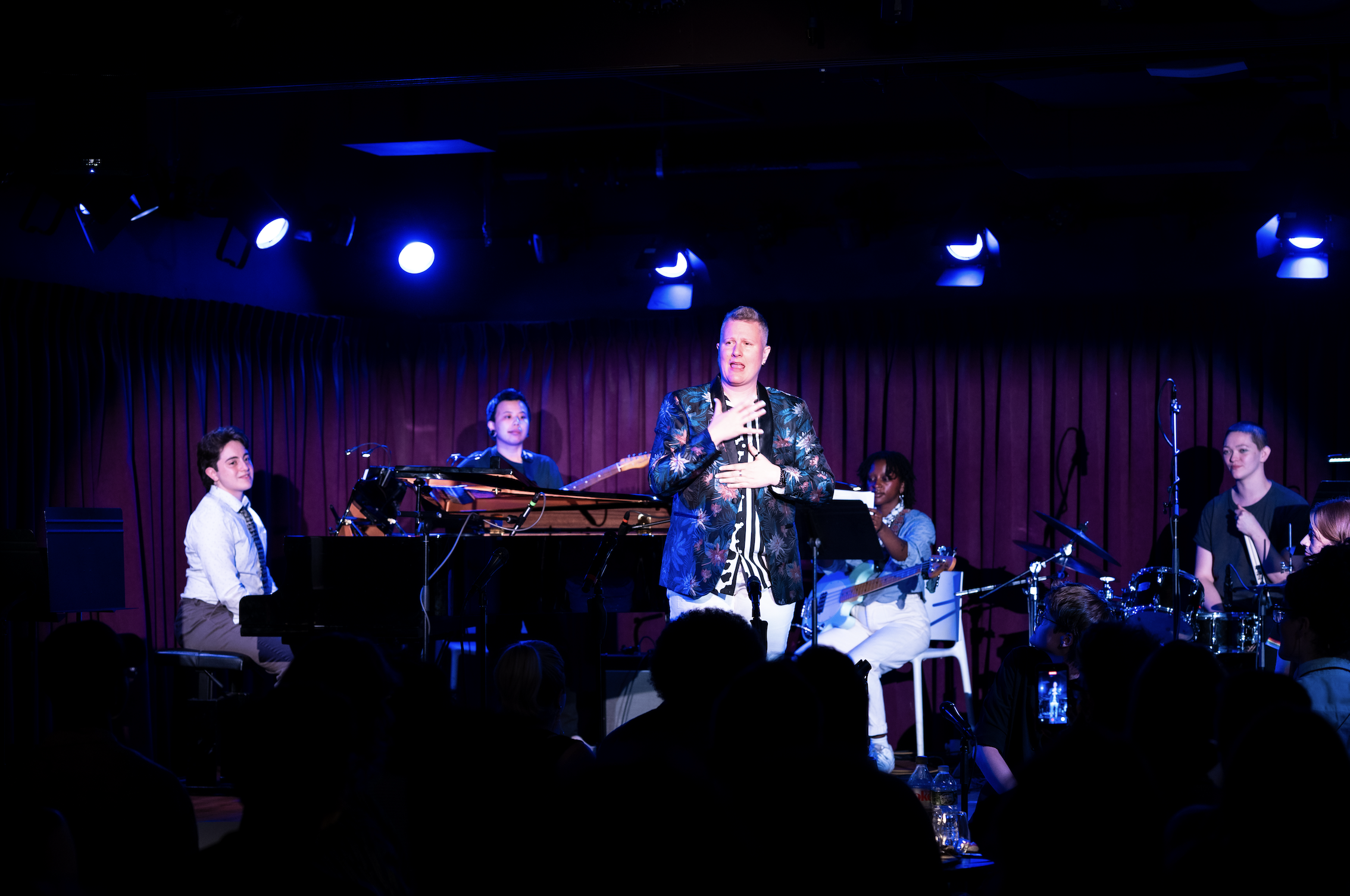
Jules Dameron. Photo by Eli Butler.
Throughout the show, the strong work of Jules Dameron (the show’s director) and Abbey Kratman (the show’s stage manager) was on display. Each performance felt specific, intentional, and, perhaps most importantly, euphoric, in a way where the artist is allowed to and encouraged to be exactly who they want to be. The casting of performers in specific scenes also allowed us to see different facets of their identities, and I loved the opportunity to see artists move so fluidly from one emotional place to another.
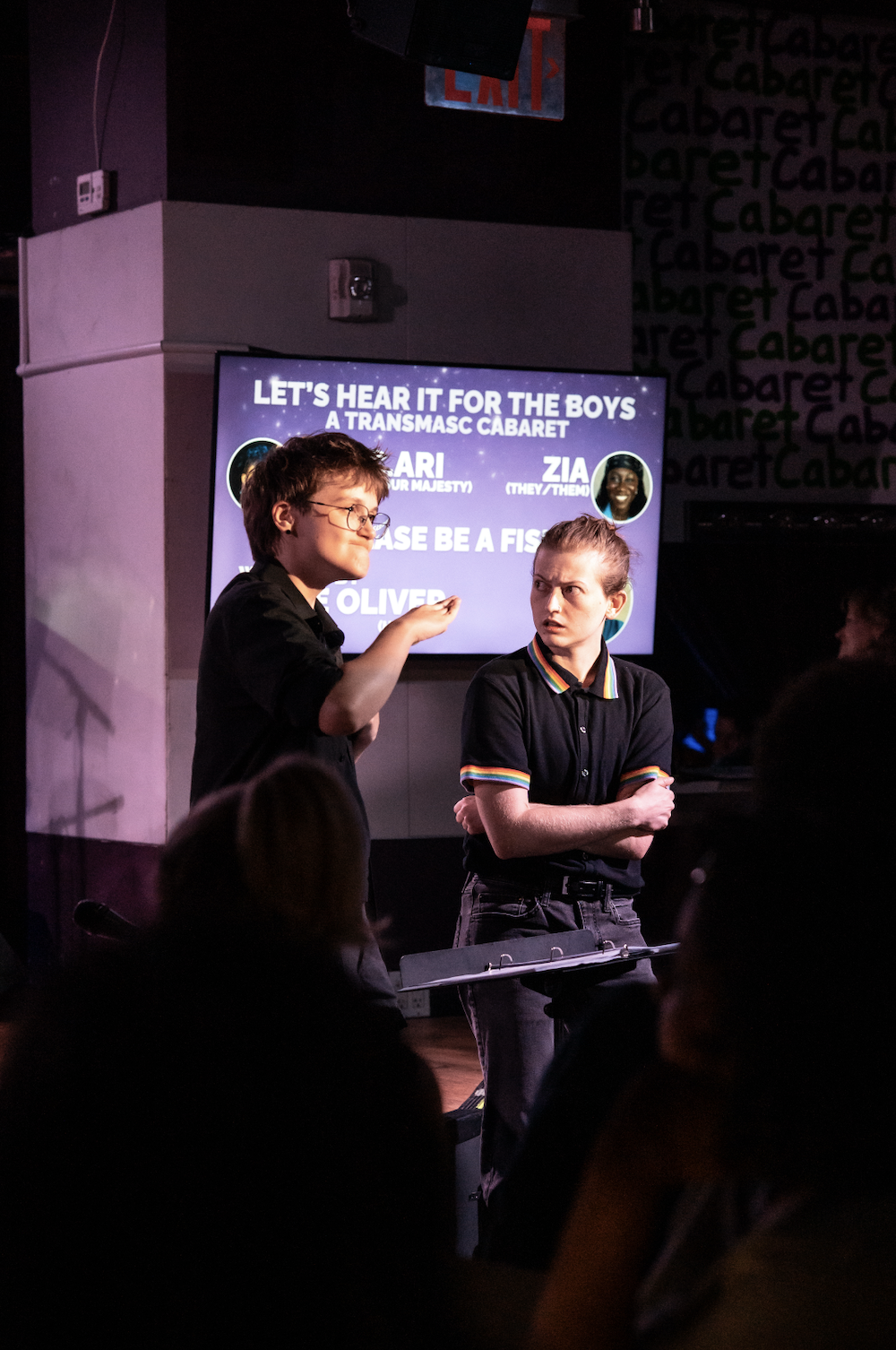
El Flansburg and Adrian Walker. Photo by Eli Butler.
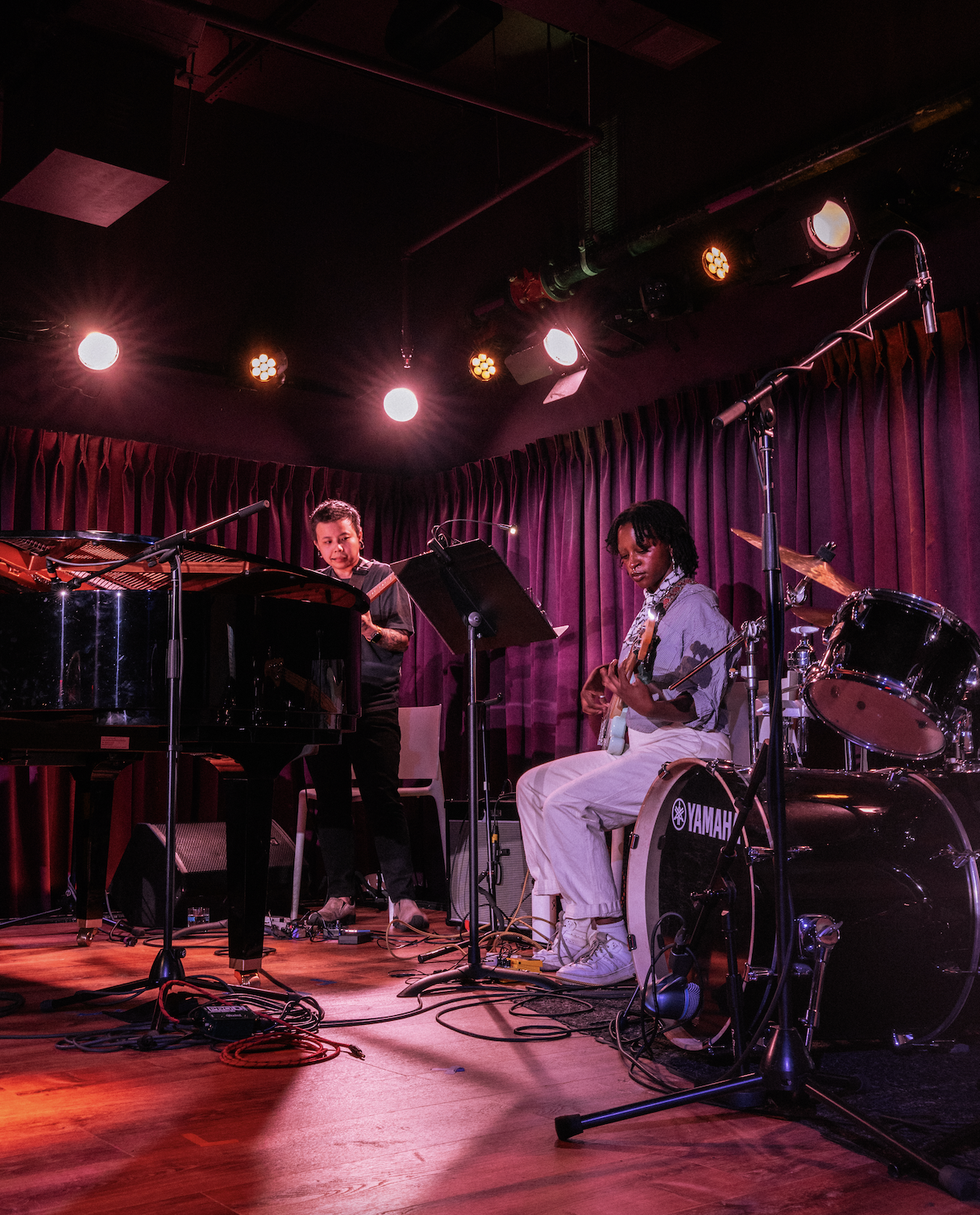
Tui Jordan and sandile mhlaba. Photo by Eli Butler.
The show’s band, composed of Kade De Angioletti (Music Director and Pianist), Han Van Sciver (Drummer), sandile mhlaba (Bassist), and Tui Jordan (Guitarist), was an incredibly robust and strong ensemble that elevated the performances, kept the energy and emotion flowing in between acts, and moved with an ease that was beautiful to watch. This ensemble truly felt like the beating heart of the show.
Adrian Walker and El Flansburg provided ASL interpretation and contributed both accessibility and their own artistry to the performances.
The ultimate message of Let’s Hear It For the Boys was that there is so much beautiful, funny, sexy, and euphoric art being created and performed by trans men and transmasculine people. This year’s show saw artists both subverting classic theatre pieces, and creating new theatrical works that center trans and queer identity in ways we haven’t seen before. I left feeling grateful and excited about what trans men and transmasculine people are already creating, and what we might do next.
Look out for next year’s show date, and hire these amazing artists!
Full show program (including cast + creative team) here.
Contact the producers: letshearitfortheboyscabaret@gmail.com
Photos by Eli Butler (IG @eligbutlerphoto)